

Introduction
Agriculture is one of the oldest human industries — yet today, it is undergoing one of its greatest transformations. With rising global food demand, climate uncertainty, and limited natural resources, traditional farming methods are no longer enough. This is where Artificial Intelligence (AI) steps in.
AI is empowering farmers with smart tools that monitor crops, predict weather patterns, optimize irrigation, and automate harvesting. The result is a new era of agriculture — more productive, more sustainable, and more resilient.
Smart Farming Through Data and Automation
Modern farms generate massive amounts of data — from soil conditions and moisture levels to plant health and weather forecasts. AI analyzes this data in real time, giving farmers precise insights into what their crops need and when they need it.
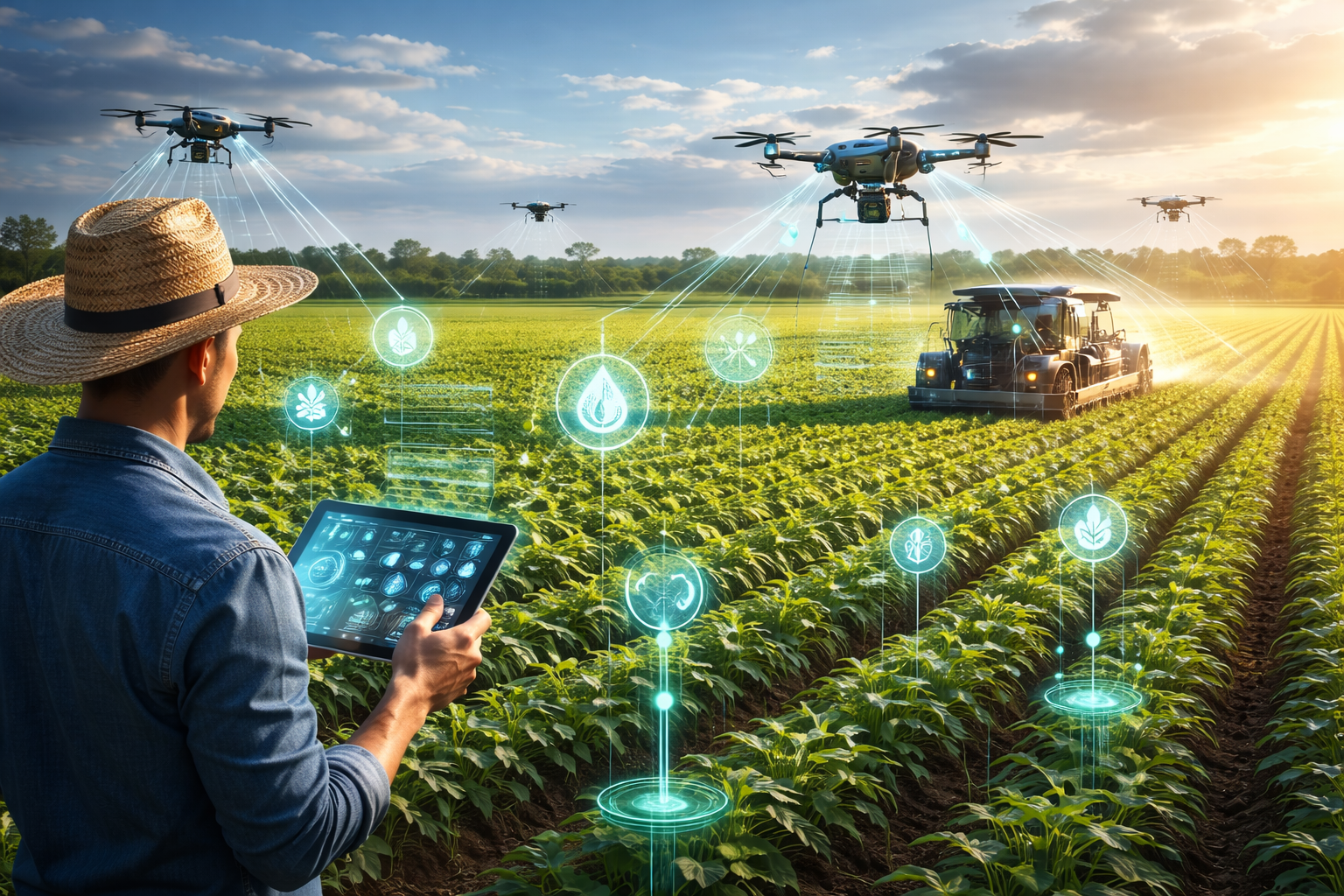
Instead of relying on guesswork, farmers can now make data-driven decisions about planting, watering, and fertilizing. AI-powered sensors and drones scan fields to detect crop diseases early, reducing losses and increasing yield.
This shift from manual observation to intelligent monitoring saves time, labor, and resources.
Precision Agriculture: Using Only What’s Needed
One of the biggest challenges in farming is resource management. Overwatering, excessive fertilizer use, and inefficient pesticide application harm both the environment and production costs.
AI enables precision agriculture — a method where water, fertilizers, and pesticides are applied only where and when needed. Smart irrigation systems use AI to adjust water flow based on soil conditions and weather forecasts. Automated sprayers target only infected plants rather than entire fields.
This reduces waste, lowers costs, and protects natural ecosystems.
Predicting Weather and Managing Risk
Unpredictable weather is a major risk in agriculture. Sudden storms, droughts, or temperature changes can destroy crops overnight.
AI-powered climate models analyze historical and real-time weather data to forecast conditions more accurately. Farmers receive early warnings, allowing them to protect crops, adjust planting schedules, and reduce potential losses.
By predicting risks before they happen, AI helps farmers plan with confidence.
Automation in Harvesting and Labor Shortages
Many agricultural regions face labor shortages, especially during harvesting seasons. AI-powered robots and automated machinery are stepping in to fill this gap.
From robotic fruit pickers to autonomous tractors, AI-driven equipment performs repetitive farm tasks with speed and accuracy. This not only reduces dependency on manual labor but also increases harvesting efficiency and consistency.
Farmers can focus on management and planning while AI handles physically demanding work.
Improving Food Supply Chains
AI doesn’t stop at the farm. It also optimizes supply chains by tracking produce from harvest to delivery. AI systems monitor storage conditions, transportation routes, and demand patterns to reduce food waste and ensure fresh products reach markets faster.
This end-to-end intelligence creates a more reliable and transparent food system.
Sustainable Farming for Future Generations
Sustainability is the future of agriculture. AI helps reduce water consumption, minimize chemical usage, and lower carbon emissions. By producing more food with fewer resources, smart farming protects the planet while feeding a growing population.
AI is not replacing farmers — it is giving them powerful tools to farm smarter and greener.
Final Thoughts
The fusion of agriculture and Artificial Intelligence is reshaping how the world grows food. Farms are becoming data-driven, efficient, and environmentally responsible.
As AI technology continues to advance, farmers who adopt these tools will lead the future of global food production. Smart farming isn’t just an innovation — it’s a necessity for a sustainable tomorrow.