

The Age of Intelligent Technology
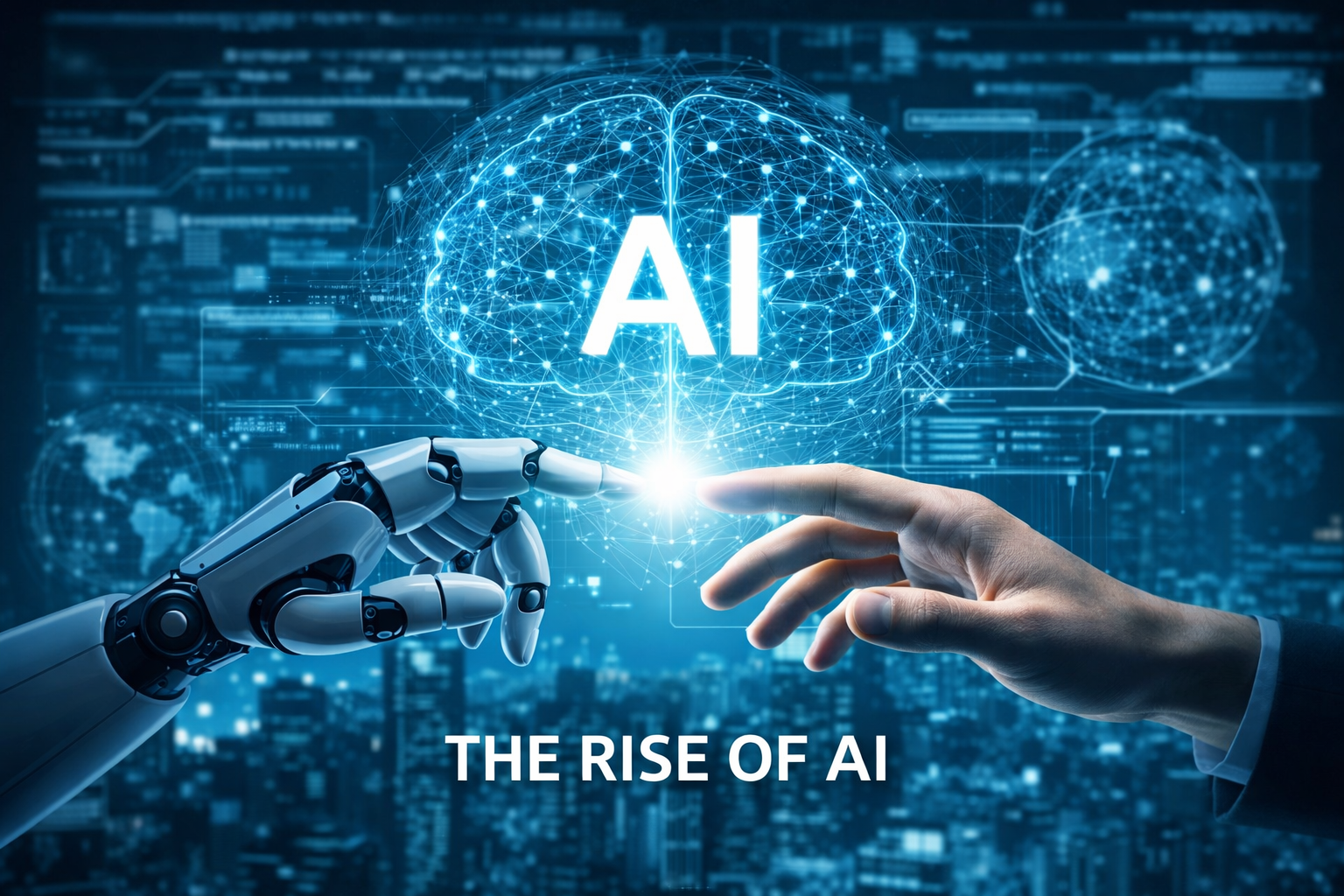
Artificial Intelligence has rapidly evolved from a futuristic concept into a powerful force driving today’s digital economy. Businesses of every size now rely on AI to automate processes, analyze data, communicate with customers, and support daily operations. This rise of AI is not simply a technological trend — it is a fundamental shift in how modern work is performed.
For business owners, freelancers, and service-based companies, understanding this transformation is essential. Those who adapt early gain efficiency, scalability, and a competitive advantage in an increasingly technology-driven market.
From Automation to Intelligence
Early automation focused on reducing manual effort. Today’s AI goes far beyond that. Intelligent systems can learn patterns, make predictions, and assist in decision-making. From virtual assistants managing schedules to AI tools analyzing customer behavior, machines now support tasks that once required human judgment.
This transition allows companies to operate faster and smarter. Administrative work, data processing, and routine communication can be handled with minimal manual input. Teams can then dedicate their time to creativity, strategy, and customer relationships — areas where human expertise matters most.
AI in Everyday Business Operations
AI has quietly integrated into nearly every aspect of business. Scheduling tools organize meetings automatically. Chat systems answer customer inquiries instantly. Financial tools track expenses and generate reports. Design platforms suggest layouts and content ideas.
For remote service providers and virtual assistance agencies, these tools increase service capacity without increasing staff size. Businesses can offer reliable support, faster turnaround, and consistent quality — all while maintaining lean operations.
AI is not replacing service teams; it is enhancing their ability to deliver value.
Smarter Decision-Making Through Data
One of AI’s greatest contributions is its ability to turn raw data into actionable insight. Businesses now use AI-powered analytics to understand customer preferences, monitor performance, and forecast trends.
Instead of relying on guesswork, leaders can make informed decisions based on real-time information. This reduces risk, improves planning, and supports long-term growth. For bookkeeping, administrative reporting, and operational management services, AI-driven accuracy builds client trust and credibility.
Redefining Productivity and Work Culture
The rise of AI has changed workplace expectations. Productivity is no longer measured by hours worked, but by results delivered. Repetitive tasks are automated, freeing professionals from routine workloads.
This shift supports healthier work environments. Employees and freelancers experience less burnout. Business owners gain time to focus on vision and expansion. Remote teams can collaborate globally with the help of intelligent communication and workflow tools.
AI has introduced a new work ethic — one that values efficiency, balance, and continuous improvement.
Expanding Opportunities for Small Businesses
Large corporations once had exclusive access to advanced technology. Today, AI tools are affordable and accessible to startups, freelancers, and small enterprises.
A small business can now automate customer service, manage data, schedule appointments, and create digital content with tools that require minimal technical knowledge. This levels the playing field and allows smaller companies to compete with larger organizations.
Remote support service providers benefit significantly from this accessibility, delivering professional-grade solutions to clients worldwide.
Challenges and Responsible Adoption
Despite its benefits, the rise of AI also presents challenges. Businesses must ensure data privacy, maintain transparency in automation, and avoid over-reliance on technology.
AI should support people, not replace accountability. Ethical adoption means combining automation with human oversight to ensure fairness, accuracy, and personal connection.
Companies that implement AI responsibly build trust with customers and create sustainable digital operations.
Conclusion: A Future Built on Intelligent Collaboration
The rise of Artificial Intelligence marks the beginning of a new business era. Operations are faster. Decisions are smarter. Work culture is more balanced. Opportunities are broader than ever before.
Yet, the true power of AI lies not in replacing humans, but in empowering them. Businesses that embrace intelligent collaboration — blending human expertise with AI efficiency — will shape the future of modern work.
The rise of AI is not coming. It is already here. The question is: are businesses ready to rise with it?